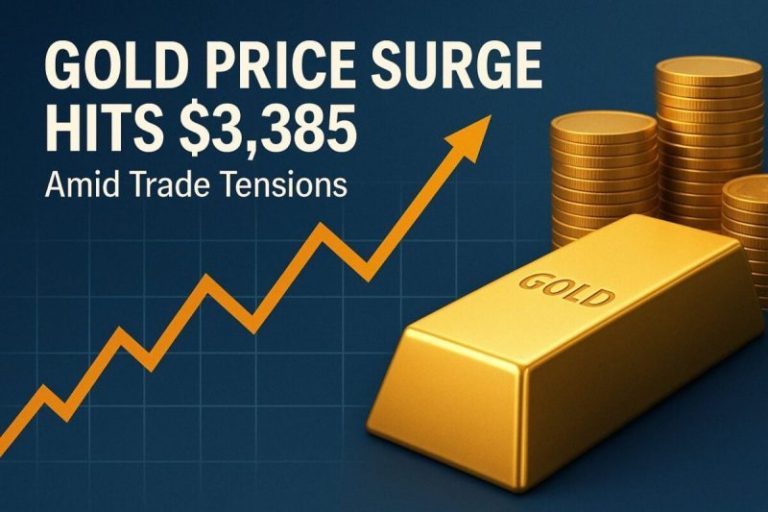
The gold price surge continued on April 21, 2025, as gold hit a record high of $3,385 per ounce. This milestone came amid a weakening U.S. dollar and renewed global trade tensions. Investors are increasingly turning to gold as a safe-haven asset, signaling market uncertainty and shifting investment strategies.
Gold Price Increase Driven by Dollar Weakness
The U.S. dollar index fell sharply, hitting its lowest level since January 2024. A weaker dollar typically boosts gold prices, as it makes the metal more attractive to international buyers. This contributed significantly to the ongoing gold price surge seen in recent weeks.
In addition, economic data indicating slower growth in key global markets has prompted investors to reduce their exposure to riskier assets. Gold’s long-standing reputation as a hedge against economic uncertainty has once again proven true.
Trade Tensions Fuel Demand for Safe-Haven Assets
Ongoing trade friction between major economies—particularly the U.S. and China—has triggered market anxiety. Announcements related to new tariffs and supply chain risks are further motivating the shift from equities to gold. This environment is ideal for a gold price surge to gain momentum.
Analysts Predict Continued Gold Price Growth
Market analysts suggest that the upward trend is far from over. If inflation persists and interest rates remain steady or fall, the gold price could climb even higher. Some predict that the next psychological barrier of $3,500 per ounce may soon be tested.
As the global economic landscape continues to evolve, gold is expected to remain a central pillar in investor portfolios. Whether as a hedge against inflation or a response to geopolitical unrest, the gold price surge is being closely monitored by financial experts.
BNB Price Surge Leads Crypto Gains as Bitcoin Climbs
The BNB price surge on April 21, 2025, stole the spotlight as Binance Coin jumped over 3.2% to cross the $600 mark. This move came as Bitcoin soared past $87,000, reigniting investor interest in altcoins. The bullish wave didn’t stop with BNB—SOL and XRP also made strong moves, reflecting a positive trend across the cryptocurrency market.
BNB Price Surge Driven by Token Burn and Momentum
Fueling the BNB price surge was Binance’s recent $1 billion token burn, which reduced the circulating supply. Additionally, increased trading volumes and renewed faith in Binance’s ecosystem helped BNB regain upward momentum. Investors are optimistic that Binance’s expansion and focus on compliance could drive long-term growth.
SOL Rally and XRP Breakout Add to Market Optimism
Solana (SOL) saw a 10.2% rally, breaking above the $135 resistance level with strong volume and technical confirmation. XRP, on the other hand, climbed past $2.10, setting the stage for a potential breakout above $2.15. These moves indicate bullish setups that are gaining attention from both traders and long-term holders.
Bitcoin Reinforces Its Role as Digital Gold
Bitcoin’s rise above $87,000 reflects renewed demand for a digital safe-haven. With increasing global economic uncertainty and inflation concerns, many investors view Bitcoin as “digital gold.” This sentiment is spilling over into altcoins, triggering the current crypto rally.
Conclusion and Market Outlook
The BNB price surge highlights growing investor confidence in altcoins. Alongside Bitcoin’s strength, tokens like SOL and XRP are enjoying increased attention. If this trend continues, more gains could be ahead for altcoin markets. Investors should monitor resistance levels and trading volumes closely for signs of sustained momentum.
The opportunity to buy Bitcoin under $100K may not last much longer. On April 21, 2025, Bitcoin (BTC) traded just below the $100,000 mark, a price level many analysts believe could be the last stop before a massive new rally begins. With institutional adoption rising and macroeconomic pressures easing, the case for long-term BTC growth is strengthening.
Why Now Might Be the Time to Buy Bitcoin Under $100K
Market experts point to several factors fueling the bullish sentiment. Firstly, Bitcoin’s halving event earlier this year significantly reduced block rewards, cutting daily supply by half. Historically, halving events have preceded major bull runs. Secondly, growing interest from ETFs and institutional players is creating steady buying pressure. Lastly, declining inflation and improved global liquidity conditions are encouraging investment in risk assets like Bitcoin.
According to Bitwise CIO Matt Hougan, “It’s not too late to buy Bitcoin under $100K. This could be one of the last best opportunities before we see a surge well beyond six figures.”
Long-Term Outlook for BTC Investors
Looking ahead, many analysts predict that Bitcoin could exceed $150,000 by the end of the year. While this isn’t guaranteed, trends in institutional adoption, limited supply, and rising use cases for Bitcoin suggest that prices may continue climbing.
Although short-term volatility persists, long-term investors remain focused on fundamentals. If history repeats itself, buying Bitcoin at sub-$100K levels may prove to be a decision rewarded in the coming cycle.
Final Thoughts
If you’ve been on the sidelines, now could be your moment to enter the market. The chance to buy Bitcoin under $100K might not last much longer. As always, do your research and consider your financial goals before investing.
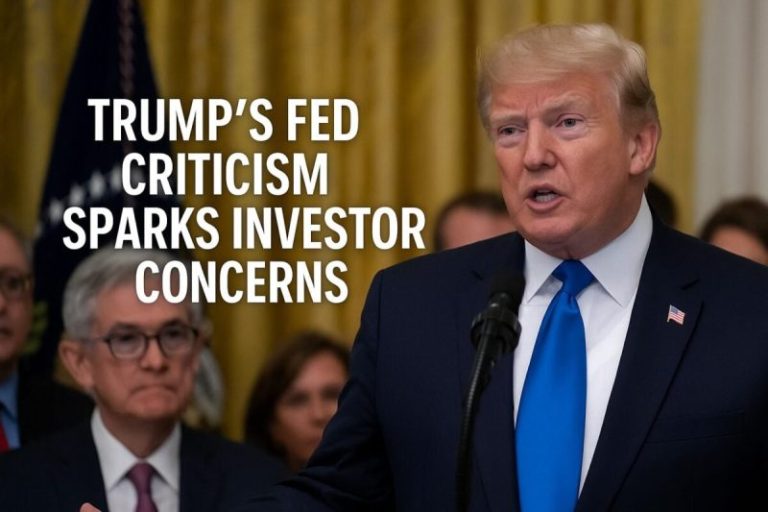
The recent spotlight on Trump’s Fed Criticism has sparked unease among investors and financial analysts alike. President Donald Trump’s repeated public attacks on Federal Reserve Chair Jerome Powell have amplified concerns over the central bank’s independence. As a result, markets have reacted with volatility, and investor sentiment has taken a noticeable hit.
Market Reactions to Political Pressure
Wall Street’s response to Trump’s Fed Criticism was swift. Major stock indices, including the S&P 500 and Nasdaq, posted losses amid uncertainty over future monetary policy decisions. Investors fear that political attempts to sway the Federal Reserve’s agenda may undermine its objectivity. If monetary policy is dictated by short-term political goals rather than long-term economic data, the implications could be severe for inflation, interest rates, and overall economic health.
Why Federal Reserve Independence Matters
One of the cornerstones of a stable economy is a politically neutral central bank. Trump’s Fed Criticism has called that neutrality into question. The Federal Reserve must be able to act without external pressure to maintain credibility in the eyes of global markets. Political interference could compromise its ability to control inflation or manage unemployment rates effectively.
Investor Sentiment and Future Outlook
Investor confidence remains fragile. Many market participants have shifted assets into safer investments such as gold and U.S. treasuries, seeking shelter from potential turmoil. Economic advisors stress the importance of maintaining clear, data-driven policy guidance, especially as the U.S. navigates ongoing trade issues and inflation concerns.
In the coming weeks, the Federal Reserve’s actions will be closely watched. Should Trump’s Fed Criticism intensify, it could further erode market stability and investor trust in U.S. monetary policy.
Oil Prices Rebound After Trump’s Criticism of Fed Chair Powell
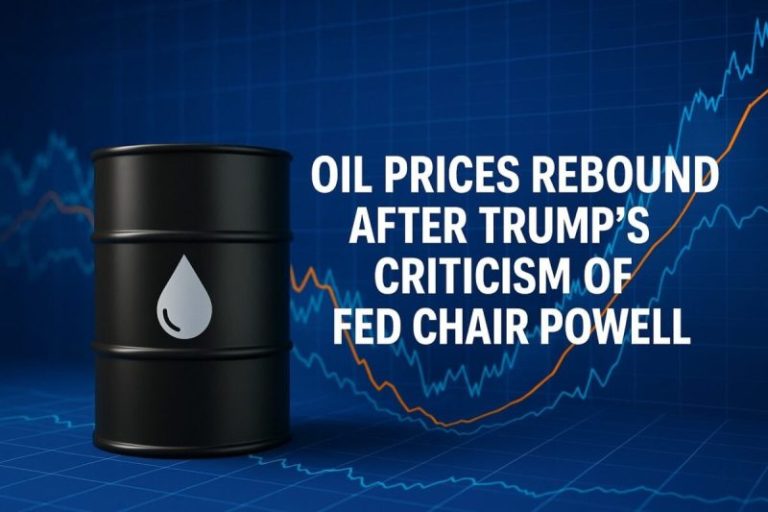
On April 22, 2025, oil prices rebound experienced a modest rebound following a significant drop the previous day. The initial decline was triggered by President Donald Trump’s renewed criticism of Federal Reserve Chair Jerome Powell, which unsettled financial markets and raised concerns about the central bank’s independence.
Market Reaction to Political Commentary
President Trump’s comments on Monday intensified investor fears regarding the Federal Reserve’s autonomy in setting monetary policy. The criticism led to a broad sell-off in equities and commodities, with oil prices bearing the brunt of the market’s anxiety.
Short-Covering Leads to Price Recovery
Despite the initial plunge, oil prices rebound edged higher on Tuesday as investors engaged in short-covering. Brent crude futures rose 0.5% to $66.62 per barrel, while West Texas Intermediate (WTI) crude for May delivery increased by 1% to $63.73 per barrel. The more actively traded WTI June contract also gained 0.7% to $62.84 per barrel.
Ongoing Economic Concerns
Market participants remain cautious amid ongoing fears of a potential recession linked to U.S. tariff policies and concerns over Federal Reserve independence. These factors have increased worries about the U.S. economy and crude demand. Additionally, progress in U.S.-Iran nuclear deal talks has eased supply concerns, potentially impacting oil prices further.
As the situation evolves, investors will closely monitor geopolitical developments and central bank communications to assess the potential long-term impacts on the energy markets.
Fourth-generation Iowa farmer Mark Mueller is no stranger to the ups and downs of the agriculture industry. But right now, he thinks America is on the cusp of a farm crisis.
Subscribe to read this story ad-free
Get unlimited access to ad-free articles and exclusive content.
“I am more concerned now than I have been in my 30 years of farming,” Mueller told NBC News.
Even before the Iran war, Mueller said, many farmers felt they were being squeezed. Consolidation in the fertilizer industry and increased competition from abroad have resulted in higher prices for fertilizer and feed — and smaller returns on Mueller’s corn and soybean crops.
Many farmers who couldn’t pay their bills in recent years went under. In 2025, the number of Chapter 12 farm bankruptcies reached 315, according to the American Farm Bureau Federation. That was up 46% from the previous year.
Now, the Iran war is putting even more pressure on farmers.
Before the war, roughly a third of the world’s fertilizer ingredients and a fifth of its oil supplies passed every day through the Strait of Hormuz, a narrow waterway off Iran’s southern coast. But since the U.S. and Israel attacked Iran on Feb. 28, the strait has been effectively closed by Tehran, leaving scores of tankers stranded.
The strait’s closure has driven up global prices for fertilizer and for the diesel fuel that powers most of America’s heavy agricultural equipment.
The double whammy is hitting farmers just as they head into the spring planting season.
“This is that perfect storm where everything comes together and hammers the farmer,” said Mueller, who also serves as the president of the Iowa Corn Growers Association.
Mueller said his fertilizer supplier was selling a nitrogen fertilizer he needs for $795 per ton on Feb. 22, a few days before the war started. At the end of March, it was $990, Mueller said, a nearly $200 jump in just a few weeks.
Meanwhile, the price he’s paying for diesel has jumped, too. Diesel is now averaging $5.51 nationwide, up from $3.76 right before the war, according to AAA.
Mueller said he got most of the fertilizer he needs for spring before the war — but had to buy some at the higher prices. He’s holding off on purchasing the additional fertilizer he needs for summer, hoping prices will come down.
Mark Mueller, a farmer and president of the Iowa Corn Growers Association, thinks America is on the cusp of a farm crisis.Courtesy of Iowa Corn
President Donald Trump’s tariffs have also added to the cost of goods that farmers import from overseas — and frustrated many of the foreign buyers of America’s agricultural products.
“Our government made our life more difficult by walking away from trade deals or instituting tariffs or just basically making our customers angry — our customers being other nations and companies in other nations,” said Mueller.
Lance Lillibridge, a corn and cattle farmer from Vinton, Iowa, told NBC News he plans to use less fertilizer this year.
“I’m probably going to see a reduction in yield,” said Lillibridge. “If there’s not the supply out there, then the price is going to go up.”
If the war continues, the higher prices could ripple through the supply chain and ultimately result in higher prices at the supermarket.
“We’re talking about all the crops and all the food products that we consume on a daily basis,” said Gregory Daco, chief economist at EY-Parthenon.
“Anything that is grown and that requires fertilizers, which is most of everything that we consume, is potentially affected by this rise in fertilizer prices,” said Daco. “And as a result, we may see these prices rise rapidly across grocery stores in the U.S.”
Take corn, for example. If corn prices spike, then feeding cattle becomes more expensive for many farmers. Plus cattle farmers are also dealing with the higher fuel prices. The cost of beef has already hit record highs — in part from shrinking cattle herds and drought — and it could surge even more.
“I worry about how much more consumers will continue to pay for beef,” said Will Harris, a fourth-generation cattle farmer in Bluffton, Georgia. “I think that I can produce it as cheap as anybody else, but I don’t know where consumers draw their lines.”
It may take a while for price increases on the farm to show up at the grocery store. Farmers are just planting their spring crops now, and it could take months for them to be harvested and sent off to distribution centers and eventually grocery stores.
But consumers may see higher prices sooner rather than later, because of higher transport costs with pricier diesel.
“If you’re feeling these costs now, it’s only going to continue to increase as the supply chain fills with higher-cost goods,” said Lillibridge.
“Corn is used in over 4,000 products,” he added. “It’s not just food — it’s industrial products, like your paper that you would put in your printer has cornstarch in it, plastics, just tons of things have industrial uses from corn.”
Economists say the longer the war stretches on, the larger the effects could be.
Newly harvested corn in Inwood, Iowa. Consumers may see higher prices sooner rather than later because of higher transport costs with pricier diesel. Jim West / UCG/Universal Images Group via Getty images file
“Right now, our farmers can get the product — it’s just really expensive,” said Faith Parum, an economist at the American Farm Bureau Federation, an advocacy group for farmers and ranchers. “We’re slowly starting to hear the longer this goes on, we’re also going to have issues with even the availability of the fertilizer.”
That could further strain farmers.
“We’re going on to year four of losses across the farm economy,” said Parum. “It’s going to become harder and harder for them to put a crop in the ground.”
Before the war, the Agriculture Department estimated that farm sector debt could reach a record $624.7 billion in 2026.
Farmers have received some financial assistance from the federal government over the years. In December, the Trump administration announced a new tranche of $12 billion in aid to farmers.
At a White House event for farmers in March, Trump said that he would push for more aid and urged Congress to pass a new farm bill.
Trump also pledged to ask Congress to permit year-round sales of E15, an unleaded fuel blended with 15% ethanol that the American Farm Bureau Federation says could save consumers money at the gas pump and create markets for American-grown crops.
Farmers listen as President Donald Trump speaks at the White House on Friday. During the event, Trump urged Congress to pass a new farm bill. Alex Wong / Getty Images
Mueller was among the farmers last month at the White House, where he listened to Trump.
“I guess I would liken it to empty calories,” he said of the president’s remarks. “It was like a pep rally with very little being said.”
Mueller fears that the mounting pressures on farmers, exacerbated by the war, could lead some to hang up their hats for good.
“I really do see fewer farmers when it’s all done,” he said. “In the end, the consumer will still have fewer choices, probably have a little higher prices, and farmers will have less margin than they did before.”
Oil prices surged Thursday, threatening to further drive up the price of gas as hopes for a near-term resolution to the Iran war faded following President Donald Trump’s address to the nation.
Subscribe to read this story ad-free
Get unlimited access to ad-free articles and exclusive content.
Stocks were volatile, with major indexes plunging early in the day before moving higher at the close on shifting headlines about the war in the Middle East.
U.S. indexes recovered their early losses on news that Iran’s deputy foreign minister said his country would outline a “new navigation regime” in the Strait of Hormuz after the war ended, injecting fresh optimism into markets over the future of the key waterway.
At the closing bell at 4 p.m. ET, the S&P 500 closed up 0.11%, the Nasdaq Composite ended higher by 0.18%, and the Dow Jones Industrial Average fell 61 points. The Russell 2000 index, which tracks smaller companies, rose 0.7%.
The United States added 178,000 jobs in March, blowing past expectations and showing a resilient labor market just as the war with Iran began escalating, sending up oil prices.
Subscribe to read this story ad-free
Get unlimited access to ad-free articles and exclusive content.
The unemployment rate fell to 4.3% last month, down from 4.4%. The gains were concentrated in health care, construction, transportation and warehousing.
Despite the outsized headline figure, there were further indications that the job market remains wobbly. Wage growth declined to 3.5% in March from 3.8% in February, falling short of forecasts.
Jobs report estimates from January and February were also revised, upward and downward respectively. Combined, they show that U.S. payrolls fell by a net 7,000 over those two months.
The labor force participation rate, or the share of the overall population either employed or looking for work, fell to its lowest level since November of 2021.
“While this month’s jobs report delivered an upside surprise, we continue to believe that risks to the labor market remain elevated and higher oil prices from the Iran conflict could prove an additional impediment in the months ahead,” Scott Helfstein, head of investment strategy at Global X financial group, said in a note to clients.
Surveys conducted by the BLS for this report were completed by March 12. At the time, the full brunt of the war had yet to hit the job market.
Three weeks later, gasoline prices have surged to more than $4 a gallon, a level that, if it is sustained, would sap U.S. consumers of hundreds of dollars in annual discretionary income.
On Wednesday, the Atlanta Federal Reserve lowered its real-time gross domestic product estimate to 1.9%, down from more than 3% just before the start of the war.
On Tuesday, the BLS reported the hiring rate in February fell to just 3.1% of the U.S. workforce, a level last recorded in April 2020, as the Covid pandemic bore down.
Job openings also fell in February, though they appear to be stabilizing overall. The rate of layoffs also remains at an all-time low.
Meanwhile, many Americans’ views of the economy and Trump’s handling of it continue to sink to new depths.
A CNN poll out this week found that just 31% of respondents approved of how Trump is managing U.S. economic performance, with just 27% saying they approved of his handling of inflation, down from 44% a year ago. His overall approval rating appears to have stabilized at about 35%.
A construction worker at a new building in Pasadena, Calif.Mario Tama / Getty Images file
A debate is now underway about how many jobs the U.S. would need to add each month to keep the unemployment rate — 4.3% as of Friday — stable.
Over the past year, a massive drop in overall immigration to the U.S., coupled with a growing number of baby boomers leaving the workforce, mean fewer overall jobs need to be created for the economy to absorb newcomers to the labor force and keep the overall unemployment rate steady, according to economists with the Dallas Federal Reserve.
That overall number of new jobs needed is known as the “breakeven” employment rate. The economists wrote in a note published this week that the breakeven employment rate now may be close to zero.
If the overall workforce continues to shrink, even fewer new jobs will be needed to incorporate workers entering the labor force, such as recent college graduates or parents who put their careers on hold for a few years.
That won’t necessarily make looking for a job any easier. The median spell of unemployment is now about 2½ months, with the average much longer — about six months. About 25% of all unemployed workers are out of work for at least 27 weeks.
Savannah Guthrie returned to the “TODAY” anchor desk Monday, more than two months after her mother disappeared.
Subscribe to read this story ad-free
Get unlimited access to ad-free articles and exclusive content.
“We are so glad you started your week with us, and it is good to be home,” Guthrie said at the start of the show. She wore a bright yellow dress, echoing the yellow ribbons and flowers left at her mother’s home.
“TODAY” co-anchor Craig Melvin, wearing a yellow tie, patted Guthrie’s hand and replied: “Yes, it is good to have you at home.”
The two anchors then turned to the morning’s top headlines, including an opening segment about the U.S.-Israeli war with Iran. “Well, here we go, ready or not,” Guthrie said. “Let’s do the news.”
Savannah Guthrie on Monday’s “TODAY.”TODAY
Guthrie, who has co-anchored “TODAY” since 2012, stepped away from her role in early February after Nancy Guthrie, 84, went missing from her home near Tucson, Arizona. Authorities have described the case as a possible kidnapping or abduction.
Guthrie told Hoda Kotb last month that she believed returning to the “TODAY” anchor desk is “part of my purpose right now,” even though it was difficult to imagine going back to a workplace she associates with “joy and lightness.”
“I can’t come back and try to be something that I’m not. But I can’t not come back because it’s my family,” Guthrie said in the interview, her first since the start of the ordeal. “I don’t know if I can do it. I don’t know if I’ll belong anymore, but I would like to try.”
Savannah Guthrie greets fans Monday in Rockefeller Plaza.TODAY
In the second hour of Monday’s show, Guthrie greeted “TODAY” fans gathered outside on Rockefeller Plaza, some wearing yellow pins and holding signs with her mother’s photo. Guthrie fought back tears as she held co-host Jenna Bush Hager’s hand and thanked her supporters for their prayers and letters.
“You guys have been so beautiful,” she said. “I’ve received so many letters, so much kindness to me and my whole family. We feel it. We feel your prayers.”
Savannah Guthrie walks with Jenna Bush Hager outside the “TODAY” studios.TODAY
Nancy Guthrie’s family reported her missing around noon Feb. 1 after she did not show up at a friend’s house for virtual church services, according to the Pima County Sheriff’s Office. She was last seen the previous night around 9:45 p.m. after having dinner at her daughter Annie Guthrie’s home, according to authorities.
The investigation into her disappearance gripped the nation and put an intense spotlight on the quiet Catalina Foothills area of Tucson. Authorities have not identified a suspect or motive, though the FBI released chilling doorbell camera video of an armed and masked man outside Nancy Guthrie’s home on the morning she was reported missing.
The bureau described him as a man of average build, 5 feet, 9 inches to 5 feet, 10 inches tall, wearing a black Ozark Trail Hiker Pack 25-liter backpack.
Guthrie and her siblings, Camron Guthrie and Annie Guthrie, have provided updates on the case via social media. In emotionally wrenching videos on Instagram, they have thanked members of the public for their prayers and made direct appeals to Nancy Guthrie’s possible abductor.
“Someone knows how to find our mom and bring her home,” Guthrie wrote in the caption to a Feb. 24 video post.
The family is offering up to $1 million for information that leads to the 84-year-old’s recovery. The FBI is offering a reward of up to $100,000 for “information leading to the recovery of Nancy Guthrie and/or the arrest and conviction of anyone involved in her disappearance.”
Kotb, a “TODAY” contributor, substituted for Guthrie. In that period, Guthrie withdrew from NBC’s coverage of the Milan Cortina Winter Olympics; Mary Carillo stepped in to co-host the opening ceremony alongside NBC Sports’ Terry Gannon.
Guthrie visited the “TODAY” set March 5. In photos taken from outside the studio by a photographer for The Associated Press, Guthrie could be seen wiping tears and embracing her colleagues. The visit was not televised.
Savannah Guthrie hugs Al Roker during a visit to “TODAY” on March 5.Charles Sykes / Invision / AP
“I really wanted to come and see everybody. I just love this beautiful place that we call home, where we get to come and be every day,” Guthrie told Kotb, adding: “When times are hard, you want to be with your family.”
Americans are getting smaller pay raises while tariffs and higher gas prices are threatening to make everything more expensive.
Subscribe to read this story ad-free
Get unlimited access to ad-free articles and exclusive content.
Translation: The affordability problem isn’t improving.
New government data released Friday showed non-supervisory workers getting a 3.4% pay raise on average hourly earnings over the last year. That’s the slowest pace of wage gains since 2021, and a downshift from the last two years, when pay bumps were closer to 4%.
The slowdown comes as economists worry about rising inflation, with the Iran war choking off oil tankers and pushing gas prices up over $1 per gallon in just a month, to a national average of $4.09 on Friday.
As diesel costs break $5.50 a gallon (compared to just $3.89 a month ago), retailers and grocers are now contending with higher transportation costs. Amazon said Thursday it will begin charging sellers a 3.5% “fuel and logistics-related surcharge” beginning on April 17.
Airlines like United and JetBlue are raising bag fees in an effort to offset sky-high jet fuel costs. The International Air Transport Association says the price of jet fuel is up 104% in the past month.
“With the recent uptick in inflation driven by energy prices, real wage growth is likely to decelerate further, putting increased pressure on consumers,” said Thrivent’s chief financial and investment officer, David Royal.
For now, Americans are still seeing their earnings rise at a faster pace than the increase in price tags at the store. As pay rose by 3.4%, the most recent inflation data showed prices rising by 2.4% year-over-year.
Wage gains for non-supervisory employees — a category that includes roughly four out of every five non-farm workers — have been outpacing price increases since March 2023, when post-pandemic inflation finally began to cool.
But the concern is that the story could change soon. Because of the bump from oil prices, Navy Federal Credit Union Chief Economist Heather Long said it’s possible inflation could pace at 4% this month.
“Four percent is above that 3.5 percent annual wage gain, and that’s where you see a lot of squeeze on workers, particularly middle-class and moderate-income workers,” Long said.
Warning signs are flashing that slowing wage growth could ripple beyond the gas station and prices at the grocery store. Higher mortgage rates now have some worried about icing out even more potential homebuyers.
The average 30-year fixed mortgage rate rose from 5.99% at the start of the war to 6.45% on April 3, according to Mortgage News Daily. The rise is due in part to concerns that the Federal Reserve will have to raise interest rates to tamp down on war-driven inflation.
“With choppy job growth, weaker labor-force attachment and rising uncertainty, many households — especially renters and first-time buyers — could become more cautious as weaker inflation-adjusted wages erode recent affordability improvements,” said Zillow senior economist Orphe Divounguy.
If wages can’t keep up with rising costs across the board, it’s likely that affordability will become a larger issue than it already was prior to the war. An NBC News poll conducted during the first week of the war with Iran found that, for a plurality of respondents, inflation and the cost of living was the most important issue facing the country.
Economists feel the same way.
Responding to a question from NBC News at a March 18 news conference, Federal Reserve Chair Jerome Powell noted that “real” wage gains — a measure of wages adjusted for inflation — need to be positive in order for Americans to feel better about affordability.
“it will take some years of positive real earning gains for people to feel good again, we think. But you’re right — when you talk to people, they do feel squeezed,” Powell said.