

















As scrutiny continues to intensify across the battery metals supply chain, the conversation around sustainability has moved far beyond carbon footprints.
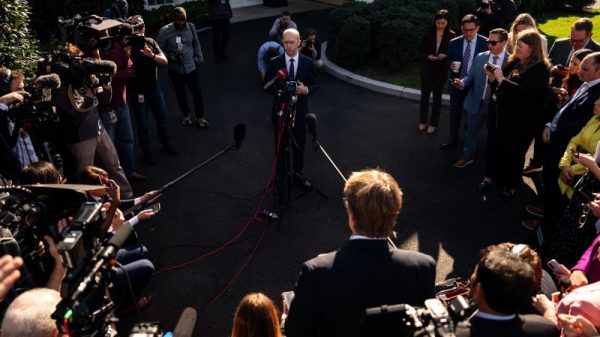
At this year’s Benchmark Week, Stefan Debruyne, director of external affairs at Sociedad Quimica y Minera de Chile (SQM) (NYSE:SQM), made that point unmistakably clear: sustainability in lithium is as much about people, process and transparency as it is about emissions — and it must be learned, not imposed.
SQM, one of the world’s largest lithium producers, has long been at the center of debates about extraction in Chile’s Salar de Atacama. But for Debruyne, the company’s vision of leadership goes beyond scale.
“We approach leadership in a holistic way,” he said. “It’s not only about having trust to produce and being able to deliver the quality the market needs, but also doing it in a responsible way — dialogue, working closely with stakeholders and civil society. We work very hard on all components.”
Building social license
Much of Debruyne’s role over the past five years has centered on improving engagement with Indigenous communities, many of which have deep historical grievances tied to land, water and the impact of large-scale resource extraction.
“It’s really about being the best neighbor possible,” he said.
But getting there has required fundamental shifts in mindset and method. One of the clearest examples is what Debruyne called the principle of horizontality — a change born from early missteps.
A decade ago, when communities questioned the mine’s hydrological impacts, SQM responded the way many industrial operators would: it sent engineers to explain the technical data.
“You would think that’s a great thing to do,” Debruyne said. “But we learned that’s not the right way, because community members aren’t hydrologists. There’s a vertical difference.”
Instead, SQM now helps communities secure independent experts of their choosing, ensuring conversations happen “on a horizontal level.” This shift has been crucial to rebuilding trust.
Just as important, Debruyne said, is abandoning the western notion of time.
“Communities have a different concept of time. It’s about giving them the time they need — taking information back, returning, iterating. You may think you’re doing things the right way, but there’s always room for improvement.”
Why social investment reduces risk
For Oxfam policy advisor Andrew Bogrand, these types of changes are not just ethical — they’re also practical.
The expert, who also spoke on the panel, noted that since 2010, more than 800 protests or violent incidents have occurred around mine sites globally, including 300 since 2021 alone.
Each one carries real costs: slowdowns, legal expenses, rising insurance premiums — and, as Bogrand pointed out, the hidden cost of executive time diverted to crisis management.
“There is a win-win solution,” he told the Benchmark Week audience. “It’s engaging communities, making sure everyone’s on the same page. Sometimes the solutions are very simple.”
As an example, he pointed to mining projects where warning messages were sent in English to communities that do not speak the language, or where key safety information was delivered over SMS when what residents needed was a physical noticeboard in their own dialect.
Bogrand described companies that “step over a dollar to pick up a penny” — refusing modest community requests, only to face shutdowns costing tens of millions of dollars.
Transparency: A tool, not a threat
Debruyne described transparency as one of SQM’s most effective tools, even if it initially felt counterintuitive.
A few years ago, the company made all hydrological data from its government reporting publicly accessible online.
“I was bracing myself,” he said, expecting to receive dozens of questions about brine levels. But counter to his fears, transparency defused tension rather than fueling it. “I received complete silence,’ Debruyne noted.
It also created a foundation for future collaboration, including joint environmental monitoring programs with communities that had refused to speak with SQM for years.
Moving slow to move fast
The tension between rapid industry growth and slow, iterative sustainability processes often surfaces in investor discussions. For Bogrand, the answer is simple: “You have to move slow to move fast.”
Rushing early stage engagement almost always backfires, he argued, while early investment in community relationships pays dividends across the life of a mine.
Debruyne echoed this idea, noting that patience, consistency and presence — not promises — win trust. In one case, SQM organized a visit for Atacama Indigenous women leaders to electric vehicle and battery plants in Germany and Poland, allowing them to see firsthand where lithium fits in a finished product.
One participant, surprised that the metal formed only a thin coating on a cathode, admitted she had imagined an “Avatar-like” scenario where mines destroyed massive volumes of land for each battery.
“Because they don’t have visibility on the value chain, they make interpretations, which is human,” Debruyne told listeners. “Dialogue is so important.”
Both Debruyne and Bogrand agree that the lithium supply chain cannot scale without social acceptance, credible transparency and deep engagement with affected communities.
As Debruyne noted, “Ultimately, it’s about people.”
Securities Disclosure: I, Georgia Williams, hold no direct investment interest in any company mentioned in this article.